A look-ahead to the 2027 US U-20 group
Another trip to the quarterfinals, another frustrating exit
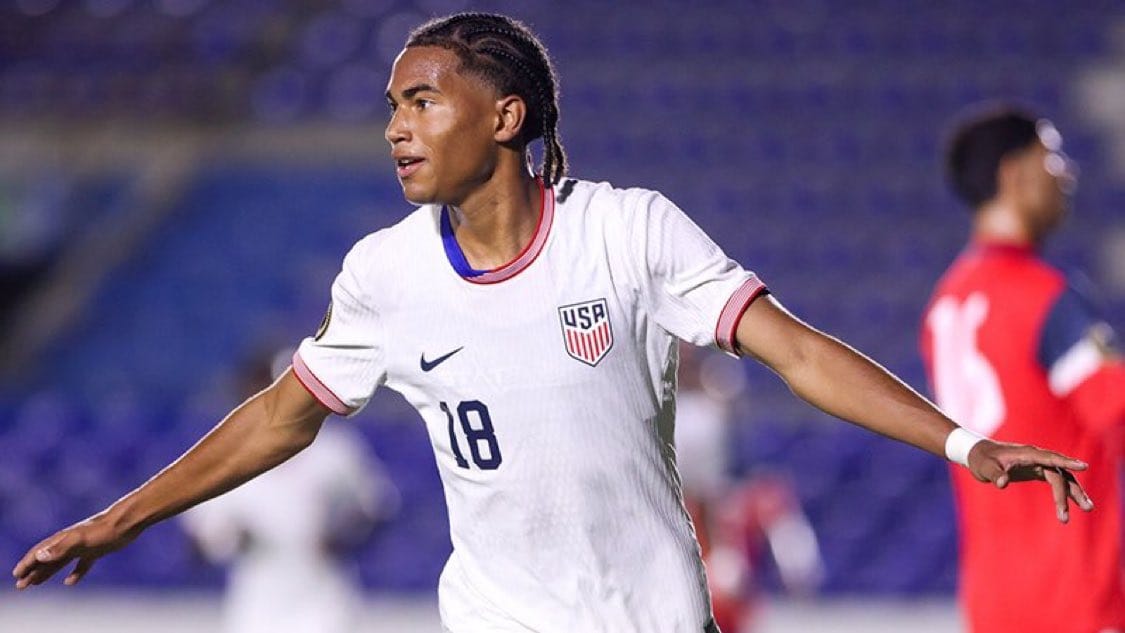
The US lost 3-1 to Morocco in the quarterfinals of the U-20 World Cup on Sunday afternoon. I was pretty disappointed – the US were the better team, logging something like 75% possession, out-shooting them by a 2-1 margin and somehow getting undone on a long throw-in then subsequently missing a few chances to equalize.
I was also pretty frustrated. Head coach Marko Mitrović did a lot of good work with this group right up until he bottled it by dropping an attacker, adding an extra d-mid and pushing Benja Cremaschi into a false 91 role. That robbed the US of his greatest (and their greatest) strength throughout the tournament: his late, box-arriving runs.
And so instead of the dynamic possession we’d gotten used to from this team over the previous four games, it was much more sterile against the Moroccans. That, in my opinion, was self-inflicted.
Frustrating. Disappointing. But also… I remain pretty optimistic. This group played good, polished soccer and looked to me like a broad and deep pool of floor-raisers, most of whom gave a good accounting of themselves. And most of them are in good club situations where they will probably play significant minutes in the next 18 months as they develop into full-fledged first-teamers.2
To me, that makes this cycle a win.
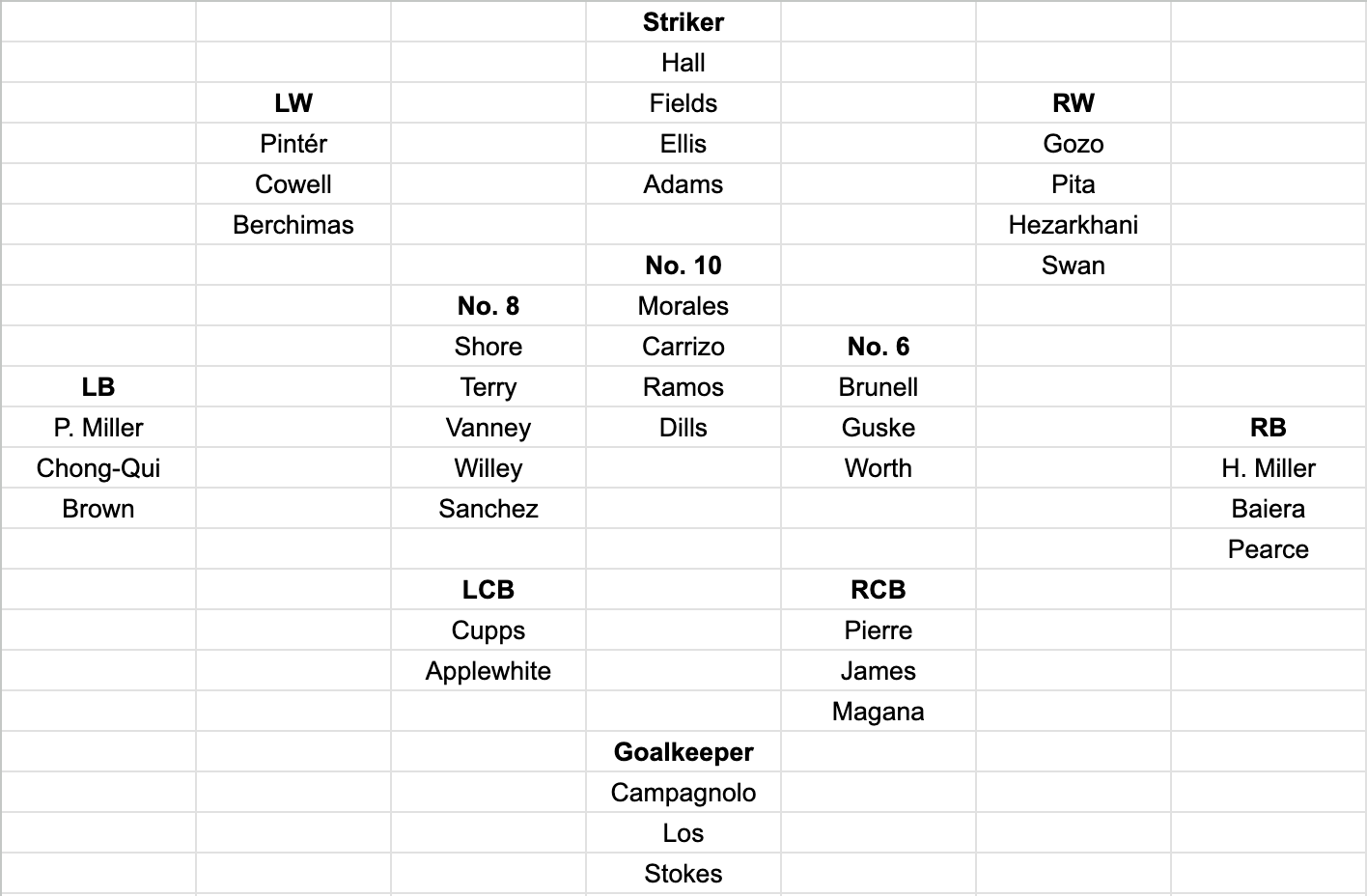
And now it’s time to move to the next cycle. After speaking with folks around the US programs and MLS Next Pro, here’s a reasonable facsimile of the current depth chart for the 20273 US U-20 team:
Some takeaways:
This is the deepest CB pool since the 2015 US U-20 team, and all five guys on this list are worth closely monitoring.
In particular, Neil Pierre was one of the best CBs in Next Pro as a 17-year-old and will probably play 1500 first-team minutes for the Union next year, while Christopher Cupps made his MLS debut this year as a 16-year-old for the Fire and didn’t look out of place. Then he dropped back down to Next Pro and posted dominant underlying numbers.
Both these guys seem to have huge futures.Speaking of dominant numbers – underlying and otherwise – you’ve got your pick of them among the wingers. There is every chance Gozo will have grown into a large enough first-team role two years from now that he’ll have moved past U-20 inclusion, but there’s a ton of talent behind and around him.
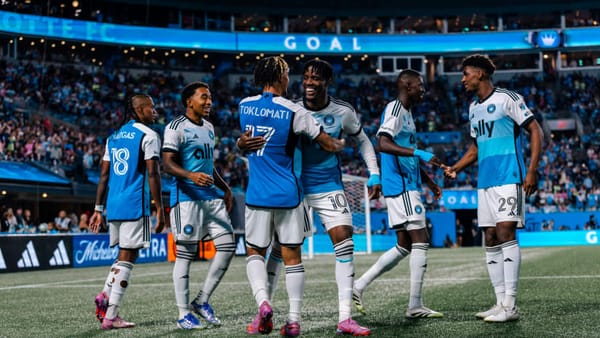
Ask me to focus on one and it’s still Charlotte’s Nimfasha Berchimas, who lost most of this year to a foot injury. I need to see him get healthy, put up dominant Next Pro numbers next season, and make his first-team debut.
No. 9s! Lots of No. 9s! Julian Hall has already hit “too good for Next Pro” levels and has looked useful in MLS as a 17-year-old, while Jykese Fields4 is putting up video game numbers for Hoffenheim’s academy, Justin Ellis has a bit of Jesus Ferreira to his game, and Chase Adams is very fox-in-the-box-ish. The latter two haven’t leveled out of Next Pro yet, but each is on a good trajectory.
Central midfield, with Snyder Brunell and Jonathan Shore – meaningful contributors to MLS playoff teams – is more proved out that attacking midfield, though the top two No. 10 prospects5 have been good in Next Pro. I also made a last-minute addition of Cooper Sanchez to the central midfield list after liking what I saw from him this weekend for Atlanta. Montreal have got to be licking their chops.
Simply loaded at both fullback spots. Peyton Miller’s upside has been obvious all season long, but man, Harbor Miller has really stood out for the Galaxy over the past six weeks, both at fullback and on the wing.
I can’t say what to make of the fact that Campagnolo (Rapids 2) and Los (Fire 2) put up better numbers in Next Pro than Stokes (RBNY 2), who has long been considered the best goalkeeper prospect among the ‘07s and ‘08s. I’m just glad there are three guys getting reps.
Ok, this is not at all a definitive list – if you are one of the big USYNT sickos I am begging you not to lose your minds here – but it’s a pretty good approximation of where things stand at the moment. Just remember that kids grow and improvement curves steepen and dual nationals are often identified and recruited, which can absolutely change things.
Plus there is the chance that a previously unmissable talent gets injured (I’m old enough to remember Charles Renken) or just drops off the face of the earth (and Axel Kei). Youth development is, in that sense, a crapshoot.
The idea, then, is to give yourself as many dice-rolls as possible. You don’t want to go all in on a couple of prospects; you want to create as many pathways for as many good ones as you can, and hope that a few turn into great ones, and a few of those turn into exceptional, world class elite ones.
That’s the game. The US are playing it. Hopefully well enough to finally make it past the quarters next time.
This is the second straight tournament in which Mitrović has gotten his team to the knockouts and then opted for a false 9 that neutered the US attack. I have a buddy (hi, John – I know you’re reading this) who’s really high on him, but man, I can not look past that kind of coaching cowardice in big games.
The US were better than Morocco. We should’ve trotted out an XI that reflected it. ↩
I am mildly concerned that Josh Wynder is not actually in a great spot wrt his club career. I know he had a tough one on Sunday, but he’s the guy I’d most like to see hit from this cohort. Let’s hope he gets a loan in January. ↩
I’m not including any 2009s, but it’s entirely possible that a few of them play up a group just as Zavier Gozo and Peyton Miller did this past month. The most likely to do so are Cavan Sullivan and Mathis Albert, though in truth neither plays a position of need for this group. ↩
Full disclosure: I’ve never seen him play and am relying on scouting reports here. ↩
Will Maxi Carrizo hit a high enough level physically? That’s the big question for him, while for Santi Morales it’s a question of playing time. There’s not a lot of it for homegrown attackers in Miami. ↩