MLS Cup champs already up against it & thoughts on the U22s
Sunday Night Soccer's got two teams who can't find the goal
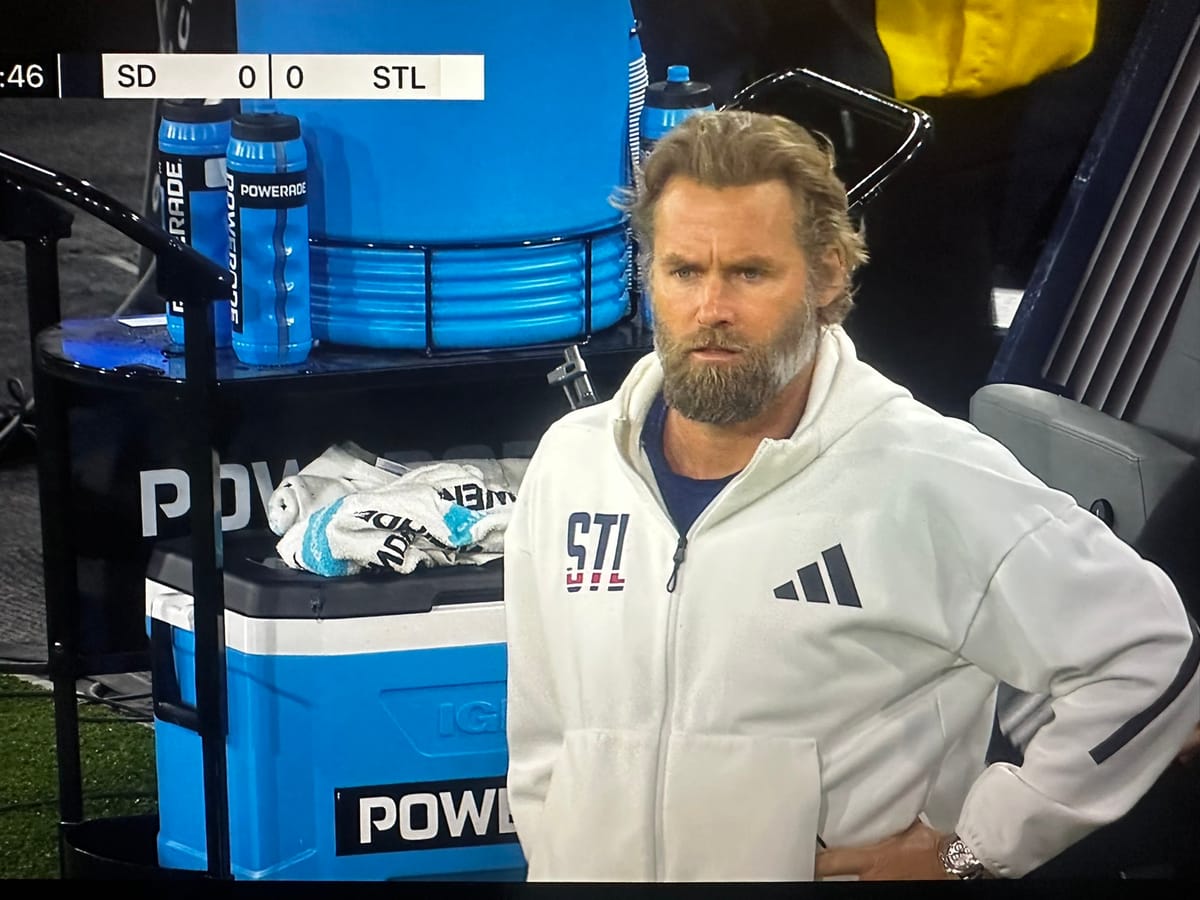
Here’s my preview of the Sunday Night Soccer match between the Galaxy and St. Louis:
It’s too early to say that either or both of these teams are in trouble, as it’s a long season and the playoff race is very forgiving in MLS. Just last year NYCFC had zero points through three games, Orlando City had one through their first four, and the Sounders had two through five (and won just once in their first nine league games).
All three of those teams finished above 50 points. Two of them actually finished top four in their conference, and so had homefield advantage in the playoffs.
So no panic yet, no matter what happens on Sunday. But also no matter what happens, Greg Vanney and Olof Mellberg have to start solving some problems because, more often than not teams that have bad starts go on to have bad seasons.
Also wrote a bit about five teams that need to get some transfer/trade work done before the window closes next month, and for three of the five the most obvious answer is “bring in a new U22 signing and make sure you get it right.”
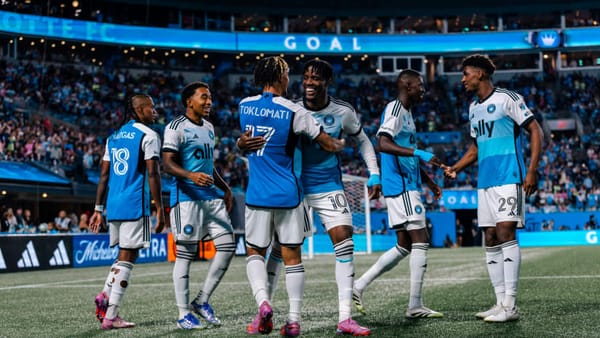
Easier said than done, though. As we saw last week with the release of the club roster profiles, there’s a philosophical gap between how teams see the value of U22 slots. Some use them almost entirely for high-upside plays on expensive imports (Miami have already had a high level of success with this, while Charlotte have gotten virtually nothing from a not-insignificant level of U22 spend).
Others have saved those spots for domestic talent – their own, or players acquired from elsewhere in the league – to become foundational pieces. Cole Bassett, Josh Atencio and Ted Ku-DiPietro are all likely starters in Colorado this year; the Dynamo went out and bought Jack McGlynn from Philly to fill a major role; Brian Gutierrez is a starter and budding star in Chicago. Montreal’s another that’s domestic focused, and Philly (even after selling McGlynn) are clearly on that path (Quinn Sullivan has been maybe the best young player in the league this year?).
The is obvious selection bias at play here1. But there is also a sense that clubs with clever front offices (Seattle, Atlanta, probably Columbus) are keeping U22 slots open with domestic considerations in mind.
I was going to write more on this – I actually had the above three graphs saved in a draft I wrote late last week – but got beaten to the punch by two of my regular reads, so I’m going to point you to their work instead:
• Ben Wright did an exhaustive amount of work cobbling together all the available data re: hit rate, salaries, transfer spend, underlying numbers and more to put a value to the typical U22 signee for Backheeled.
If you want to get the hard data on the initiative, you have to read the piece. If you want distill it into two sentences, though, here they are:
Based on all the available data (minutes played, on-field performance, transfer fees, and their next league after MLS), we’ve categorized just over 35% of U22 Initiative signings as successful signings. It’s an incredibly volatile method for improving rosters and bottom lines.
This does not mean that teams should avoid spending on U22 prospects! Miami wouldn’t have won the Supporters’ Shield last year without Diego Gomez and Federico Redondo, and look like they’re even better this year because of the addition of Telasco Segovia. Pedro Vite has been a big part of Vancouver’s success the past three years, and Ramiro Enrique deservedly won the starting job in Orlando. Igor Jesus and David Martinez both look like home runs for LAFC.
But teams, by and large, clearly have to get better at talent ID, acquisition, development and integration.2
• Arman Kafai did an excellent job of approaching this from the team-building perspective, and why there have been relatively few homegrown players to make the jump into the U22 slots.
Again, you should read this whole blog. But if you want the two-sentence takeaway:
We shouldn’t just focus on domestic players as U22s. I just don’t think they’re getting as much usage as they should be.
I’ve been banging this drum for a long, long time. Fit and opportunity are success-determining factors for like 95% of soccer players who have the requisite baseline talent, and I’m hoping that more MLS teams will follow the lead of the Rapids, Dynamo and Impact in getting domestic products – their own, and kids from academies around the league – into situations that benefit both team and the kid.
It’ll be cheaper, the floor will be higher, and it’ll make the league better.
Tough week for MLS clubs in Conacacaf Champions Cup play.
The free space, as always, is disappointment.
The only domestic products who become U22s are guys who have already shown they’re good enough to be steady contributors, while by definition you’re taking a bigger swing (and thus a higher strikeout rate) on imports. ↩
I suspect they will. The early hit rate on DPs was lower than it is now, and almost nobody had academy success for the first 10 years of the homegrown initiative. It takes time and institutional knowledge for most teams to learn how to use new player acquisition devices efficiently. ↩